
Kenosha County Criminal Court Cases
All Wisconsin felonies and criminal misdemeanors filed in Kenosha County are heard in Wisconsin Circuit Court. Kenosha County belongs to the Second Judicial District. Its eight Kenosha County circuit branches sit in the courthouse and Molinaro Building at 912 56th Street in Kenosha. The Kenosha County Clerk of Circuit Court maintains the case file, records court events, handles court finances, and supplies public copies. A Kenosha County criminal court case commonly uses the two-letter code CF for a felony or CM for a misdemeanor. CT marks criminal traffic. The filing year and sequence complete the Kenosha County case number.
Kenosha municipal matters need a separate check. Kenosha city and village municipal courts decide ordinance and many noncriminal traffic cases, so a citation may never become a Kenosha County criminal case in Circuit Court. WCCA is the right first stop for a filed Kenosha felony or misdemeanor. A Kenosha municipal court is the right custodian for its own ordinance file. The Wisconsin circuit court overview explains why Circuit Court has original criminal jurisdiction.
The official overview also provides a useful view of the Wisconsin Circuit Court structure serving Kenosha County.
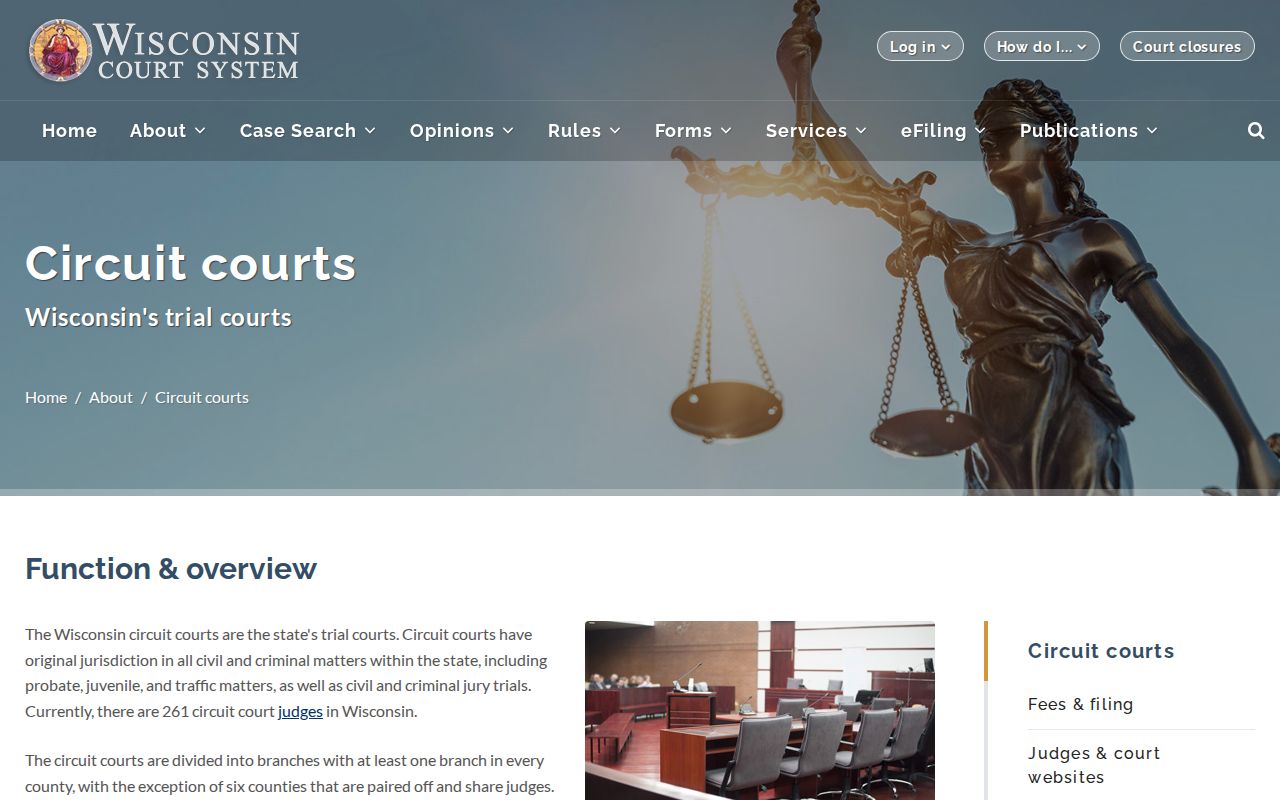
That statewide structure puts each Kenosha County criminal filing in a circuit branch while preserving one public search path through WCCA.
Eight Kenosha Criminal Court Branches
Kenosha County has eight branches, not one room called the criminal court. WCCA identifies the assigned judge and branch on each docket. The official directory inspected for the research placed the branches in rooms 336, 124, 100, 117, 205, 228, 305, and 209. Direct branch numbers differ, while the clerk's Records Department routes file requests at 262-653-2664. Readers should take the branch from the live case detail rather than guess from the type of charge.
This Kenosha County setup matters when a hearing moves or a paper exhibit is not online. The assigned branch manages the proceeding, but the Kenosha County clerk remains custodian of the court record. The Kenosha County District Attorney, also at 912 56th Street, prosecutes the state's case and does not act as the records counter or defense office. Kenosha County court security controls entry to the campus. A file question belongs with the clerk, while a case-strategy question belongs with counsel.
Searching Kenosha County Case Records
Wisconsin Circuit Court Access, or WCCA, is the free public component of CCAP and the main online path for Kenosha County case records. It is a statewide index of public court cases, not a Kenosha County jail list or a complete criminal-history repository. Exact spelling and a known Kenosha County case number reduce false matches. Search the whole state after a Kenosha County check when the question may cross county lines.
- Accept WCCA's use terms and choose the party-name or case-number search path.
- Enter the most exact lawful identifiers available, then select Kenosha County to narrow the results.
- Filter by filing range, status, or criminal case type when the public interface offers those controls.
- Open the docket and read each count's statute, plea, disposition, date, and sentence. Save the case number.
- Call Clerk Records when a document is not online or when inspection, a copy, or certification is needed.
| Field Label | Type | Required | Options or Notes |
|---|---|---|---|
| Party name | Text | One search path | First, middle, and last name; exact spelling helps |
| Birth date | Date | Optional or variable | Can distinguish common names; public display may limit details |
| Case number | Text | One search path | Wisconsin format includes year, type code, and sequence |
| County | Dropdown | Optional | Select Kenosha for a county search or leave statewide |
| Status and type | Filters | Optional | Separate criminal, traffic, and other categories |
| Filing dates | Date fields | Optional | Narrow a long result list by time period |
Kenosha Court Copies at Clerk
An online docket does not guarantee that every public document is downloadable. Kenosha County Clerk Records asks for 24-hour notice to retrieve a file. Call 262-653-2664 and provide the WCCA case number. If staff must search without that number, the clerk may charge $5. Public copies cost $1.25 per page, and certification adds $5. Inspection at 912 56th Street can help a reader identify the few pages actually needed before ordering a large file.
The Kenosha County courthouse is open Monday through Friday from 8 a.m. to 5 p.m., except posted county holidays. Public courthouse WCCA access also gives Kenosha County readers a route without internet service. The Kenosha County Clerk of Courts identifies the official office, while the Kenosha County clerk's court-file request guidance sets out the retrieval and copy terms. Call first for a Kenosha County archived exhibit or a document that may need review.
The county's Clerk of Courts page shows the public office used for Kenosha County criminal court files.
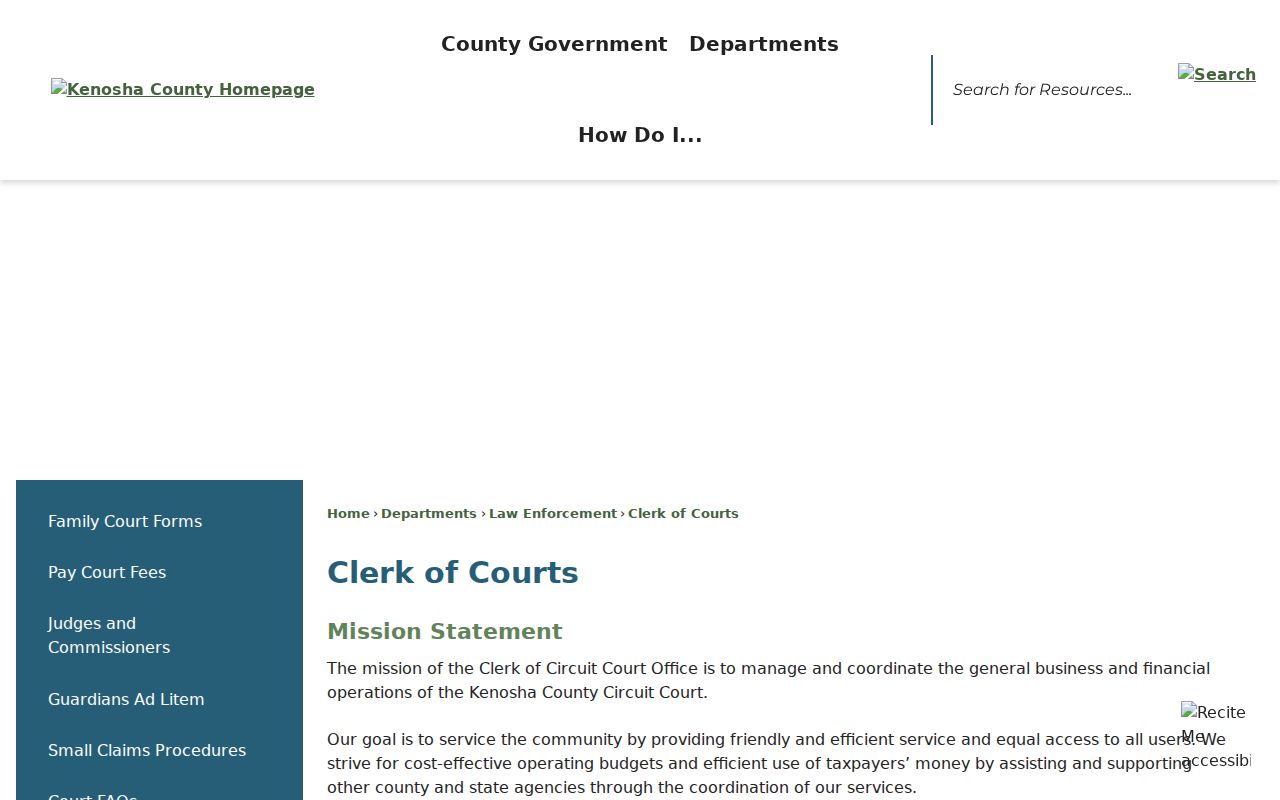
This Kenosha County clerk route is the key fallback when the Kenosha County public docket lists an event but does not display the underlying filing.
Inside a Kenosha County Case File
A Kenosha County criminal case file is organized around the filed Kenosha County court case, not the booking episode. It may show a caption, filing date, case type, status, assigned Kenosha County judge, counsel, each numbered charge, court activity, future hearings, financial obligations, judgments, and public electronic documents. The Kenosha County complaint states probable-cause allegations. It does not establish guilt. The Kenosha County judgment and charge-level disposition supply the final result unless a later appeal or order changes it.
| Case Number and Court | Filing year, case-type code, sequence, Kenosha County, assigned judge, and branch |
|---|---|
| Charging Document | Complaint or information stating the prosecutor's filed counts and alleged facts |
| Docket Entries | Chronological filings, appearances, motions, warrants, orders, and payment events |
| Hearing Dates | Past and scheduled court events, subject to live calendar changes |
| Disposition and Judgment | Outcome of each count and the written judgment when a conviction occurs |
| Sentence and Conditions | Confinement, probation, restitution, and other court-ordered terms shown publicly |
Kenosha County victim data, juvenile material, protected identifiers, sealed files, and confidential documents are not ordinary public fields. Paper exhibits can remain at the Kenosha County counter even when the docket is online.
Reading Kenosha Criminal Charge Lines
Read every Kenosha County count separately. One Kenosha County case can contain a conviction, a dismissal, and a read-in count at the same time. “Closed” only says the Kenosha County case no longer has ordinary unresolved activity. It does not mean every charge produced a conviction. A dismissed but read-in count is not a conviction on that count, though Wisconsin practice may let the Kenosha County court consider the conduct while sentencing on another count.
- CF and CM
- WCCA type codes for criminal felony and criminal misdemeanor cases.
- Plea
- The defendant's formal answer to a charge, such as guilty, not guilty, or no contest.
- Disposition
- The count's outcome, including conviction, dismissal, or acquittal.
- Read-in
- Dismissed or unfiled conduct considered at sentencing without a conviction on that count.
- Judgment
- The final written record identifying a conviction and its sentence.
Severity and statute matter too. Wisconsin law classifies felonies under Wis. Stat. § 939.50 and misdemeanors under § 939.51. Municipal ordinance violations are not automatically criminal misdemeanors. The live statute, the plea, and the final disposition must be read together.
How a Criminal Case Moves
A Kenosha County prosecution can start with an arrest or a summons. The Kenosha County prosecutor then files a complaint. An initial appearance addresses rights, charges, and release conditions. A Kenosha County felony may proceed through a preliminary hearing or waiver, followed by an information and arraignment. Discovery, motions, and pretrial work come next. The Kenosha County case may end through a plea or trial, then judgment and sentencing. Postconviction motions or an appeal can add later Kenosha County entries.
Case flow: Charges Filed › Arraignment › Pretrial › Plea or Trial › Disposition › Sentencing
No blanket local time promise fits every case. Custody status, hearing waivers, motions, and statutory deadlines affect the pace. WCCA's date list is the best public timeline, while a current notice from the branch controls an appearance.
Kenosha Booking-to-Court Timeline
The Kenosha County arresting agency and jail create records before the Kenosha County court file exists. At intake, the Kenosha County jail enters the arresting agency's charge labels, bond or hold data, fingerprints, and custody status. The Kenosha County District Attorney then decides what to file. Once a Kenosha County complaint is opened, WCCA becomes the better source for the prosecutor's actual charges. That is why the jail label and court charge can differ without either record being a clerical error.
CCAP carries the process one step further. It manages Wisconsin court case information and sends disposition and sentence data electronically to the Wisconsin DOJ Crime Information Bureau. The official CCAP description explains that court-to-repository link.
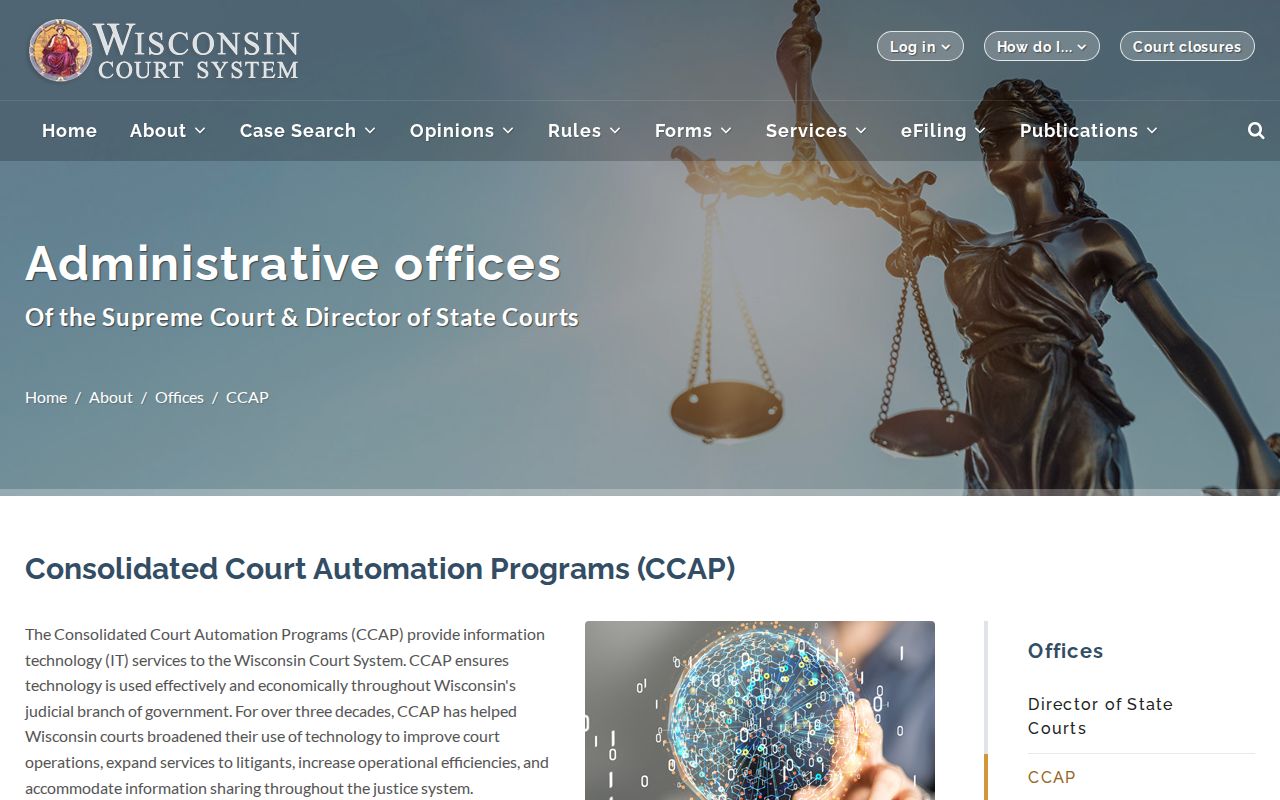
This transfer helps update a Wisconsin repository record, but the clerk file remains the source for the filed pleadings, judgment, and count-level history.
Missing Kenosha Court Documents
A missing download does not prove a Kenosha County criminal case or document does not exist. Some Kenosha County exhibits remain on paper. Public electronic access differs by document, and confidential or expunged Kenosha County material is withheld from the ordinary view. A recently filed Kenosha County item can also take time to appear. Save the case number, note the docket entry and date, and ask Kenosha County Clerk Records whether a public counter copy is available.
If the entire case is absent, check spelling and run the WCCA search statewide. Then consider whether the matter was municipal, juvenile, sealed, federal, or never charged. The sheriff holds arrest reports and jail records, not the court's official pleadings. The broader Kenosha County arrest lookup explains that custody side when a court case has not yet been filed.
Case Record Access & Restrictions
Wisconsin Public Records Law favors inspection of Kenosha County records, but public access is not the same as unrestricted online display. Wis. Stat. § 19.31 states the access policy, while §§ 19.35 and 19.36 govern requests, fees, and limits. Kenosha County juvenile files, victim information, Social Security and financial identifiers, confidential informants, sealed cases, and protected court material may be withheld or redacted. Kenosha County authorities can also separate public portions from material that the law protects.
Wisconsin expungement under Wis. Stat. § 973.015 is narrow and normally depends on a qualifying order made at sentencing plus successful completion. A case that does not appear in WCCA might be restricted, but absence alone proves nothing. Confirm the status with the clerk. Name matches also require care because the public result is not fingerprint identification.